On this page
Understand examinations and procedures
Before a vaginal examination, ask what it is for, how the result will affect your care and whether it is necessary now. Any intervention proposed during childbirth, such as augmentation of labour, artificial rupture of membranes, episiotomy, assisted vaginal birth or caesarean birth, deserves an explanation suited to the situation. You can ask who will perform the procedure and limit who is present.
A birth plan helps communicate your preferences; it can evolve with you and your clinical situation. Consent given earlier does not replace discussion at the time of care.
Consent, even when time is short
An emergency does not automatically remove the need for consent. In Québec, the exception includes situations where life is in danger or physical integrity is threatened and consent cannot be obtained in time. Whenever possible, the team explains what is happening and the available choices. After an emergency, you can ask for a meeting to understand the procedures performed.
Learn more: Civil Code of Québec, articles 10 to 18.
Choose pain relief options
Support, position changes, breathing and water may help some people. Medication options include epidural analgesia, certain opioids, nitrous oxide and a pudendal nerve block. Their availability and suitability vary by location and your circumstances. Ask about benefits, adverse effects and alternatives. Needing medication is not a failure.
Learn more: INSPQ — medication for pain relief during labour · INSPQ — techniques and positions during labour.
Feel respected and safe
You can ask to stay covered, understand before being touched and make your limits known. A traumatic experience can make some procedures especially difficult; you do not have to describe it in detail to ask for adjustments. Humiliating remarks, communication that excludes you or an unexplained procedure can have lasting effects. Your experience deserves to be heard; this website cannot determine an individual’s responsibility or the legal characterization of events from a distance.
If you are dissatisfied, you can ask for the contact details of the institution’s service quality and complaints commissioner and users’ committee. A request for community support does not replace this recourse.
After childbirth: the labia and pelvic floor deserve care too
Giving birth should not mean facing an injury, pain or ongoing discomfort alone. Vulvar appearance can change without an injury. However, poor healing, pain, uncomfortable friction, leakage or distress deserve assessment, even years after birth.
Labial tears: assess, explain and decide together
Labial tears have been documented, but the cited studies do not establish the frequency of persistent injuries in Quebec. Small, aligned, non-bleeding tears do not always need stitches. Deeper or gaping wounds may require repair depending on examination. For a painful old scar or functional difficulty, ask for a gynecological assessment. Secondary repair can be discussed in selected cases, without guaranteed results. The goal is not to make all vulvas look alike.
Pelvic floor rehabilitation: function, not “putting muscles back”
Rehabilitation may address urinary control, organ support and muscle function. An individualized assessment guides strengthening, coordination or relaxation; more contractions are not automatically the answer to pain. INESSS recommends improved access when clinically indicated for urinary incontinence and access for pelvic organ prolapse. Its 2023 assessment found insufficient evidence to take a position on improved access for all perineal pain or anorectal dysfunction. That does not mean a person should be denied assessment.
Quebec: existing services and our advocacy
According to OPPQ, physiotherapy provided in public institutions is covered; private clinics charge fees, with possible reimbursement depending on insurance or a program. This does not guarantee postpartum pelvic floor rehabilitation for everyone. Ask your care team or CLSC about eligibility, waiting times and costs. Quebec’s Pelvic Health Program currently describes care for urinary sling complications; it is not a universal postpartum rehabilitation program.
We advocate public, free and equitable access to a postpartum recovery pathway: a consent-based assessment, follow-up of labial and perineal healing, pain relief options, pelvic floor physiotherapy when indicated and specialist referral for persistent injuries. Medically indicated repair should be accessible when the person wants it, not imposed. Services should reflect clinical need and urgency, with transparent criteria and waiting times, rather than ability to pay. This is our advocacy position, not a promise of current universal coverage.
Asking for help now
“Since giving birth, I have discomfort around my labia or perineum. Could you assess healing, explain my options and arrange follow-up?” Examination requires your consent; you can ask questions and stop it. Your maternity team, primary care professional or Info-Santé 811 can help you find care.
Do not wait for routine follow-up if a wound opens, you develop fever, unusual discharge or smell, or significant or worsening pain. Contact a healthcare professional promptly; wound breakdown requires timely assessment.
Independent clinical review remains pending. The cited evidence cannot establish the prevalence of persistent labial injuries in Quebec or guarantee repair outcomes.
Sources
- INSPQ — The body after childbirth
- Iliaens et al., 2025 — Obstetric perineal trauma guidance
- Sanders et al., 2021 — UK labial injury audit, not a Quebec estimate
- INESSS, 2023 — Pelvic floor rehabilitation: indications and evidence limitations
- OPPQ — Physiotherapy access and fees
- Quebec — Current scope of the Pelvic Health Program
- NICE NG194 — Postnatal follow-up, healing and wound breakdown
At home: understanding pelvic floor exercises
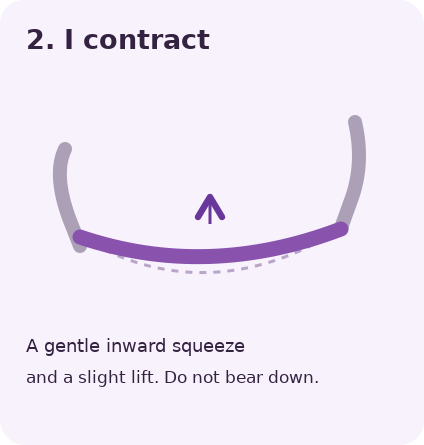
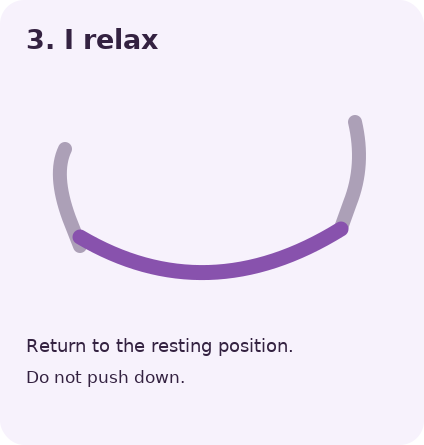
The pelvic floor is a group of muscles involved in organ support and continence. A Kegel exercise involves a contraction followed by complete relaxation, not continuous squeezing. A painful or overactive pelvic floor may need relaxation and coordination rather than strengthening.
When can I start after birth?
There is no single starting date for everyone. Very gentle contractions may sometimes start in the first days, if comfortable and consistent with your care team's advice. This does not mean forcing on day two. Seek advice first if you have pain, a complication or a urinary catheter; wait until the catheter is removed. After a caesarean or stitches, CHUM advises waiting until scars are no longer painful before resuming its exercises. Progress depends on recovery, not a universal timetable.
A gentle example, without equipment
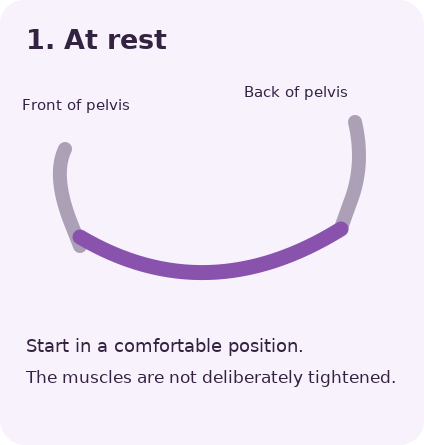
- Lie or sit comfortably.
- Imagine gently holding in wind and urine: aim for a small squeeze and inward lift, not bearing down.
- Keep breathing normally without strongly tightening your buttocks or thighs.
- Relax completely, return to rest and pause before repeating.
Start with a few comfortable contractions rather than maximum force or duration. A pelvic health physiotherapist can check technique and tailor repetitions. Do not routinely stop the urine stream to practise. Stop if pain occurs or symptoms worsen. If you cannot feel the movement, bear down, struggle to relax, or have persistent leakage or heaviness, seek assessment rather than doing more repetitions.
Weights, cones and biofeedback: do I need them?
No object is needed to start. Studied vaginal cones are not equivalent to every product marketed as vaginal balls. Postpartum-specific evidence remains limited and does not establish general superiority over exercises. Some biofeedback devices may help in an individualised programme. A 2024 trial in 452 women with postpartum stress urinary incontinence found benefit from pressure biofeedback added to exercises; it does not mean everyone needs a device.
Seek professional advice before using an intravaginal device after birth, especially with incomplete healing, pain or difficulty relaxing. Do not insert weights to repair a tear or increase load to seek sensation.
What exercises can and cannot do
A systematic review published in 2025 found pelvic floor muscle training during the first postpartum year may reduce urinary incontinence risk. Effects depend on the programme and circumstances, without guaranteed individual results. Exercises do not stitch labia, heal a wound or guarantee restored sensation. They do not replace assessment of injury or persistent pain.
Seek prompt care if a wound opens, pain increases, you develop fever, a hot or swollen area with foul-smelling discharge, or difficulty urinating. Do not wait for exercise to resolve these signs.
Home exercises must not become a reason to leave women without support. We call for accessible assessment and tailored postpartum follow-up, including pelvic health physiotherapy when needed.
Sources and limitations
Documentary synthesis dated 14 November 2026. Human clinical review pending. General information is not an individual assessment.
“Since giving birth, I feel less in my breasts or during penetration”
A possible experience, not a diagnosis. Pleasure, desire, lubrication and the ability to feel touch are different things. Reduced sensation deserves attention, not an automatic explanation that it is “all in your head.” Physical and emotional factors can coexist.
What research can tell us
A prospective study of 150 women measured vaginal and clitoral sensory thresholds during pregnancy and three and six months after birth. It found changes associated with mode of birth and variable recovery. These are sensory measurements, not direct measures of pleasure; they cannot predict an individual’s recovery or, by themselves, justify choosing a particular mode of birth.
Fatigue, tissue recovery, scars and hormonal changes can also affect comfort and sexuality. Breastfeeding may be associated with less lubrication. This does not automatically explain a true loss of touch sensation. Evidence specifically addressing loss of breast sensation after birth is limited: findings about pelvic nerves cannot simply be applied to the breasts.
What if this has lasted months or years?
That is not a reason to give up seeking help. Studies of the first months after birth cannot by themselves explain longstanding sensory loss or promise recovery. A twelve-year follow-up study examines sexual function after an obstetric anal sphincter injury: it does not directly measure breast or vaginal touch sensation. A change starting after childbirth does not establish its cause.
A 2021 nipple study measures touch perception and its associations with several characteristics, including age and birth history. It does not show that childbirth or breastfeeding causes permanent sensory loss. Evidence about pleasure cannot replace evidence about touch perception.
Where to begin, without pressure
- Describe what has changed: reduced touch sensation, different pleasure, dryness, pain or desire? When did it start, where, and how has it changed? Greater sensation with self-stimulation does not prove a psychological cause.
- Explore only what feels comfortable: affection, external touch, and a pace and pressure you choose, without a requirement for penetration or orgasm. A condom-compatible lubricant may help with dryness. No toy is essential; do not force sensation, and stop if it hurts. You may try gentle touch with a hand or through soft fabric at room temperature, alone first if you prefer, then with a partner who respects your limits. With reduced sensation, avoid ice, heat, pinching and strong stimulation: an injury may go unnoticed. These are comfort options, not a proven treatment to restore nerves.
- Seek assessment if the change persists, worries you or affects your life: a doctor can assess possible causes; a midwife can also offer guidance within their scope of follow-up care. Depending on the findings, gynaecology, urogynaecology, pelvic health physiotherapy or sexual medicine/sex therapy may help. Neurological assessment can be considered when the examination reveals relevant signs. There is no mandatory panel of tests or hormone tests for everyone. Strengthening exercises are not automatically suitable for everyone. A randomized trial improved muscle strength without demonstrating an additional benefit in sexual function.
An emergency in a different situation: new numbness around the perineum or genitals together with difficulty urinating, loss of bladder or bowel control, or leg weakness needs urgent assessment. This does not mean that an isolated, longstanding reduction in pleasure is an emergency.
You can say: “My sensations have changed since giving birth. I would like help distinguishing reduced pleasure from loss of sensation and understanding which assessments might help.” You do not have to endure it or prove that it is “serious enough” to discuss.
Sources and limitations: Kasielska-Trojan et al., 2021 — nipple and areola sensation; Twelve-year follow-up after obstetric anal sphincter injury, 2026; NHS — general precautions for reduced sensation; Mahoney et al., 2023 — pelvic sensation; Schütze et al., 2022 — pelvic floor exercise trial; INSPQ — sexuality after birth (French); Royal Free London — neurological warning signs. Documentary synthesis dated November 14, 2026, without human clinical validation. No specific treatment guaranteeing the return of breast sensation after birth is established here.
Mental health after giving birth
Postpartum is the period after giving birth, not a diagnosis. Depression, anxiety disorders, obsessive-compulsive disorder (OCD), childbirth-related post-traumatic stress and postpartum psychosis are real health conditions that deserve recognition and assessment. You can love your baby and still need help.
Baby blues or something more?
- Baby blues: tearfulness, irritability and mood changes can happen in the first few days and usually ease within about two weeks.
- Depression or anxiety: sadness, loss of interest, guilt, worry that is hard to control, or panic attacks can make everyday life harder. Seek help if symptoms worsen, persist or interfere with daily life. You do not need to wait two weeks if you are very distressed.
- Intrusive thoughts: unwanted, repeated thoughts or images that frighten you can be a symptom of anxiety or OCD. An unwanted thought is not the same as an intention. A health professional can help you understand what is happening.
- After a birth you experienced as traumatic: nightmares, unwanted memories, avoidance or constantly feeling on edge are worth discussing, even if the birth appeared to go well to others.
When to get urgent help: sudden confusion, hearing or seeing things others do not, or losing touch with reality after childbirth require emergency assessment. If you or your baby are in immediate danger, call 911.
Who can you talk to in Québec?
Call your CLSC, midwife or care team without waiting for your next appointment. You can also call Info-Social 811 (option 2) to speak with a professional and find local help. Someone you trust can help you make the first call if you wish. If 811 is not available in your region, contact your local health centre.
Something you can say: “I haven’t felt like myself since giving birth. It’s affecting my sleep or my daily life, and I’d like help understanding what’s going on.”
An assessment helps identify the right support. Depending on your situation, your team may suggest psychotherapy, group support or medical treatment. Discuss your preferences and breastfeeding, if relevant; the choices depend on your symptoms and health history.
What we know in Québec
In the 2024 Parental Experiences Survey, 35% of mothers and birthing parents in Québec reported an emotional or mental health problem during pregnancy or after birth. Among those who reported a problem, 60% said it began after birth. These are self-reported survey responses, not diagnoses of postpartum depression. Statistics Canada, results released in 2026, Table 3.
Sources and limitations
- Canadian CANMAT guideline (published in 2025) and SOGC Guideline No. 454 (2024): recognition, assessment and treatment of perinatal mental health disorders.
- INSPQ: baby blues and INSPQ: depression after birth.
- Capitale-Nationale clinical cohort (2026) and multisite Québec clinical cohort (2025): describe patients seen at specialist clinics, not how common conditions are in the general population.
- Québec Toi, Moi, Bébé prevention trial (2026): coaching did not outperform the program alone. Results compared with usual care are promising, but that comparison was not randomized. A prevention program does not replace clinical care.
- Canadian group cognitive behavioural therapy trial (2024): symptoms improved in the intervention group compared with a waitlist. EMDR trial after a birth experienced as traumatic (2025): improved short-term symptoms, but no significant difference in clinical PTSD diagnoses.
- Postpartum psychosis consensus (2026).
Sources accessed November 18, 2026. General information; does not replace professional assessment.
After birth: your body and intimacy
Recovery can take time. The perineum, scars, fatigue and pelvic floor can affect comfort. Tell your doctor, midwife or follow-up team about persistent pain; a referral to pelvic floor physiotherapy or sexology may be appropriate.
Learn more: INSPQ — your body after childbirth.
Desire can fluctuate with sleep, responsibilities and hormones. Breastfeeding can reduce lubrication. Resuming activities depends on healing, what you want and the instructions you received; there is no obligation to resume on a set date. Touch and intimacy without penetration can also be part of your sex life. You can change your mind at any time.
Learn more: INSPQ — sexuality after birth.
A difficult birth can leave fear, sadness or intrusive memories. If these reactions are weighing on you, ask for professional support. You do not have to wait until they become unbearable.
Evidence in context
- Québec: an exploratory study published in 2025 collected 271 online questionnaires in August and September 2022. It documents experiences including invalidation and lack of consent. Its recruitment method does not allow prevalence to be estimated for the whole population.
- Canada: the historical PHAC maternity survey reported 53.8% of labour and birth experiences as “very positive” and 26.2% as “somewhat positive.” These older data (2006–2007 survey) measure neither the current situation nor mistreatment directly.
- International: Bohren et al. (2019) reported that 35.4% of the 2,672 women surveyed in Ghana, Guinea, Myanmar and Nigeria experienced physical or verbal abuse, or stigma/discrimination. Facilities were selected; this result cannot be applied to Québec.
These studies use different methods and definitions. Their proportions cannot be compared directly.
Learn more: Mercerat et al., 2025 — obstetric experiences in Québec · PHAC — Maternity Experiences Survey, historical results · Bohren et al., 2019 — study in four countries.
Need support during pregnancy?
Our community support network is being developed. You can submit a need through the existing form; this does not book in-person support or guarantee a response time. The movement does not provide pregnancy follow-up, doula services or obstetric care. New arrangements for perinatal support still require a framework.
Need support or want to contribute?
I need supportShare my experienceFind a serviceOur community support network is being developed: no in-person support or immediate response is guaranteed. The movement is not a clinical or emergency service.
Participation is voluntary. No personal account is published automatically. Do not share details that could identify anyone. Privacy and retention.
This information does not replace advice from your care team. It is not a diagnosis, a medical or sexology consultation, or personalized legal advice. The resources cited are not official partners of the movement.
Share in your community
Sources and content tracking
Status: Clinical, legal and educational reviews pending. This page includes documentary references; this audit does not attest to a clinical review of the page as a whole.
Sources consulted and references on this page
These references come from the existing content. Grouping them here does not mean that every document and statement was rechecked on November 13, 2026.
- Civil Code of Québec, articles 10 to 18
- INSPQ — medication for pain relief during labour
- INSPQ — techniques and positions during labour
- INSPQ — your body after childbirth
- INSPQ — sexuality after birth
- Mercerat et al., 2025 — obstetric experiences in Québec
- PHAC — Maternity Experiences Survey, historical results
- Bohren et al., 2019 — study in four countries
Traceability notice added November 13, 2026. This date does not constitute a clinical review of the content. Earlier dates on this page remain those of the existing content; the date of its last complete substantive review is not documented. Our method · Report an error.
Editorial lead: Dominique Guay, community initiative. Method and source selection
Childbirth: before, during and after
These links organize the information already available in the care pathway. Options depend on each procedure and your situation; no method guarantees zero pain.
What it is and what I might experience
Understand proposed procedures
Possible care and pain relief
Discuss options at your birth setting
Questions and consent
Express preferences and ask for explanations
Afterwards: recovery and warning signs
Have pain or difficult healing assessed
Emotional support and resources
Sources and useful words
References remain alongside the detailed sections linked above. Read the glossary additions.
Share my experience
Go to the experience-sharing page
Documentary references checked on November 18, 2026. General information, not a prescription. Clinical, legal and educational reviews pending. Documentary checks and translation do not replace these reviews.
Birth and access to pain relief: an experience worth hearing
A public personal account
In the ABC report, she describes repeated requests for pain relief and a vaginal examination that continued despite her request to stop. Her experience raises issues of listening, consent and access to analgesia.
Australia · Samantha Burgess · ABC News · March 19, 2024. Paraphrased individual account; it does not represent everyone’s experience.
Read the account and find its source →